

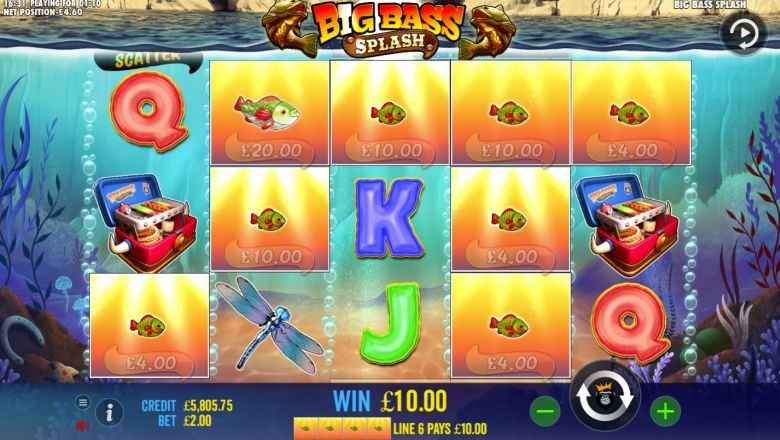





Pragmatic Big Bass Splash In Norway
Understand symbols, pace, and breaks, set limits from the start, and play Big Bass Splash responsibly in Norway (18+).
Big Bass Splash Pragmatic
Many search for this phrase because they want to be sure they have found the correct version of the slot machine and the right provider, without getting lost in copies or incorrect versions. It often comes down to two things: knowing what you are actually opening, and understanding how a short session can be managed with simple choices.
Imagine you have ten minutes before you need to leave the house. You just have time to start a round, but you don't want it to turn into half an hour of rapid clicks. What you do now, before pressing spin, determines the pace: choose a low stake, turn on a reminder, and decide on a stopping point.
In Norway, you should also consider the frameworks around gaming: 18+ always applies, and responsible platforms provide for breaks, limits, and the possibility of self-exclusion. The point is not to make the experience "strict", but to make it predictable. When you know where the limits are, you can actually relax while playing.
Big Bass Splash Game
The game builds on a simple routine: you choose your stake, start rounds, and follow symbol combinations that give payouts. Nevertheless, it's easy to misunderstand what drives the results in a short session. There isn't one trick. It's the sum of many small choices: how long you play, how fast you play, and whether you change your stake when things fluctuate.
Imagine you get a few small hits early on and feel like "this is going well". Many then increase their bets a bit, because it feels safe. A more controlled variant is to do the opposite: keep your bet stable, play a fixed number of rounds, and take a short break regardless of whether you are in profit or loss.
It's also smart to distinguish between entertainment and expectation. Some evenings features and hits come frequently, other evenings it feels slow. Instead of looking for hidden patterns, focus on what you can control: budget, time spent, and the feeling you play with (calm or irritated). That difference means more than many will admit.
Get Started With Account And Limits
A good start isn't about "getting in as fast as possible", but about getting your setup in place. When you have control over your account, settings, and limits, the rest becomes easier: you avoid interruptions that create stress, and you make fewer impulse choices in the middle of a session.
Imagine you finally have a calm evening and want to try a few rounds. You register quickly, but then it stops because you need to confirm details. Many then become impatient and continue playing while waiting, or they deposit more than planned to "keep it going". If you do the account part first, you avoid that trap.
In Norway, age control and verification are normal. Don't see it as an obstacle - see it as part of the security framework. When you handle it at a time when you are calm, you will have a better gaming experience later.
Registration And Age Verification
Start with the practicalities: create an account, fill in information correctly, and make necessary confirmations before planning a longer session. The goal is to avoid situations where you have to "fix something" while you are already playing and focused on rounds and bets.
Imagine you've just had a good round and want to cash out a bit. If the account isn't ready, you might encounter extra steps that take time, and the irritation could tempt you to keep playing instead of ending. A simple routine is better: do confirmations beforehand, and let the playing be the playing.
Also look for settings that allow you to set limits early. The sooner you activate these, the less chance you will "just" exceed what you actually intended.
Deposits, Budget And Bets
Depositing is often the moment when everything can go either smoothly or chaotically. Do it in the right order: decide your budget, choose a payment method, set your maximum bet, and only then start your rounds. If you start spinning and do the budget afterwards, it's easy to spend more than you thought.
Imagine you deposit an amount and think you'll play calmly. After a few rounds with little result, you feel the temptation to increase your bet to "get a little more action". Instead, stop and take a micro-break: count to ten, check how much you've spent, and only continue if it still feels like entertainment, not chasing.
A useful move is to divide your budget into two or three parts. When one part is used, take a break and consider whether you want to quit or start a new, short session with the same bet level. It makes quitting easier.
Limits work best when they are concrete. Set a time limit (e.g., 15-30 minutes), a deposit goal for the day, and a rule for what you do when you get irritated. Also use reminders that pop up while you play, so you are actually stopped in your tracks a bit.
Imagine you're playing on mobile and time disappears. When the reminder comes, get up, drink some water, and decide again. If you continue, do so at a slower pace and with the same bet. If you stop, do so without "taking one more round" - it's precisely that round that often drags things out.
Timeout is a short break that takes you out of the flow. Self-exclusion is a longer stop when you see a pattern you can't break with small breaks. Both are tools, not punishment.
Imagine you start playing faster, clicking without paying attention, and thinking more about winning back than having a good time. Then timeout is the right choice immediately. And if you notice this happening often, a longer block is more honest and more effective. The most important thing is that you use these features early, before it gets expensive.
Game Flow, Features And Control
Once you're in the game, the pace determines the experience. Small choices like auto-spin, quick buttons, and bet changes can turn a session from calm to hectic in minutes. Therefore, learn to "read" the game with practical eyes: what happens when you press, and what happens when you stop?
Imagine you're in a good mood and everything feels easy. That's often when many get careless with limits, because it doesn't feel dangerous. Set up the frameworks before you start, and let them stand. It's much easier to follow a plan when you don't have to negotiate with yourself in the middle of a round.
Below you will find a simple overview of what is smart to check. It gives you a routine you can repeat every time, whether you play for a short time or a bit longer.
|
What You Check Before You Start |
Typically Where You Find It |
Why It Helps |
|
Rules And Payout Logic |
Info button or game menu |
You understand what actually gives a win |
|
Bet Level And Pace |
Bet selector and spin controls |
You prevent your budget from disappearing too quickly |
|
Auto-spin Settings |
Auto-spin menu |
You set stops and avoid uncontrolled flow |
|
Time And Deposit Limits |
Account settings |
You get a fixed limit for the evening |
|
Breaks And Blocks |
Responsible tools |
You get a clear stop button when needed |
How To Read Game Info Quickly
Game info is often ignored, but you don't need to read everything. Take three points: how wins count, which symbols trigger features, and if anything changes at different bet levels. Then you don't have to guess, and you reduce the impulse to "test a bit" with high stakes.
Imagine you see a symbol that seems important, but you don't know what it does. Instead of pressing on and hoping, open the info and scan for that exact symbol. It takes less than a minute and saves you many rounds of wrong expectations.
Also hold back when switching between games. Many jump back and forth and lose track of what has been set up. If you're testing, do it in short sessions, with the same bet, and with a break in between.
Auto-Spin And Quick Selection
Auto-spin can be convenient, but it can also remove that little "think before you click" moment that often prevents overspending. If you use auto, set clear stop conditions: max number of rounds, stop at a certain change in balance, and stop when time is up.
Imagine you're chatting while playing. Auto-spin is running, and you're not paying attention. Suddenly, you've spent more than you thought. A simple solution is to skip auto when you're distracted, and instead play manually with conscious breaks.
Quick bet selection is also a trap. It makes it easy to jump up a level without noticing. Therefore, decide on one level before you start and stick to it, regardless of whether you feel "hot" or "unlucky".
Mobile Sessions With Control
On mobile, everything gets faster. You play while you wait, while you're in bed, or while watching something else. That's precisely why mobile sessions should be shorter and more structured than sessions on a larger screen.
Imagine you open the game for five minutes before falling asleep. You're tired, and it's easy to click mechanically. Set a timer before you start, and keep the bet low. When the timer rings, stop - don't negotiate with yourself.
Another practical habit is to play in the same place when you can: a quiet chair, a stable internet connection, and minimal multitasking. It sounds trivial, but it makes your decisions better.
Withdrawals, Customer Support, and Calm Routines
Many think about withdrawals and support only when something goes wrong. It's better to make these things routines. When you know how to withdraw, what verification might be required, and how to get help without frustration, sessions become less stressful.
Imagine you're having a good evening and want to secure some of your winnings. If you don't know what's needed for withdrawal, you might end up postponing it and playing on "until later". Make it simple: plan withdrawals as part of ending your session, and contact support only when you have specific questions.
In Norway, it is also important to play within the 18+ age limit, and to use the available tools when it doesn't feel right. Good support isn't about magical answers, but about practical solutions.
Withdrawals Without Haste
The best time for withdrawals is often when you are calm, not when you are excited. If you are in profit, you can choose to withdraw a portion and leave the rest as entertainment budget. This way, you lock in some funds and reduce the risk of the entire win disappearing in a long closing session.
Imagine you've just had some good hits and want to continue because it feels promising. Stop for a minute and make a decision outside the game: either you quit, or you withdraw a portion and continue playing at a slower pace. Both choices are better than letting your feelings decide.
Also plan for processing to vary by method and verification steps. This makes you more patient, and patience is often what prevents you from going straight back to spinning to "wait".
Verification and Documentation
Verification is about security and age control, and it becomes easier if you do it early. Gather what you need, upload it calmly, and avoid starting a new session while waiting for confirmation. It's easy to think you'll just play a bit while you wait, but that's often where control slips.
Imagine you receive a message that something is missing. Instead of getting annoyed and playing on, do one thing: find out exactly what's missing, submit it, and log out. Once that's done, it's easier to stick to your budget next time.
Customer Support That Actually Helps
To get helpful answers, you need to ask questions in a way that support can work with. Describe what you did, when it happened, and what you expected. Avoid long explanations about feelings or "it seems unfair" - keep it practical.
Imagine a payment request is stuck. Write briefly: which method, which amount, and if you have completed verification. When you do that, you avoid ten rounds of follow-up, and you get a quicker resolution.
It's also wise to ask about responsible gambling tools if you're unsure how to set limits, breaks, or self-exclusion. The best platforms make this clear, and support can often point you to the correct setting without much back and forth.
Safety Choices When It Doesn't Feel Right
Sometimes the problem isn't about technique, but about your state of mind. If you play to relieve stress, or if you get irritated and start increasing your bets, it's a sign that you should stop. Don't wait until your budget is gone.
Imagine you catch yourself thinking, "I need to win back what I lost." At that point, it's no longer entertainment. Take a timeout, put down your phone, and do something else. If this happens often, consider a longer self-exclusion. You lose nothing by taking breaks, but you can lose a lot by ignoring the signals.
Common Mistakes and Small Adjustments
Most losses of control don't come from one big mistake, but from small, repeated decisions: slightly higher stakes, a bit more auto-spin, a little less break. That's why small adjustments can have a big effect. The goal isn't to be perfect, but to make sessions more predictable.
Imagine a week where you play a few more evenings than planned. It might not feel dramatic, but the total can be greater than you think. A simple solution is to create a fixed rule: one or two short sessions a week, with the same time limit each time. When the framework is the same, it becomes easier to recognize when you're about to slide.
Also avoid believing that you have to "quit when you're ahead" or "play until you win back". Both thoughts make you constantly move the goalposts. Instead, quit because the plan says so, not because your feeling dictates it.
Short Checklist Before Next Round
Take a 20-second check before you start: Have you set a time limit, do you know your maximum stake, and do you have a clear stop point? If the answer is no, set it now. Imagine you're already a bit stressed – then it's extra important to play slowly, take breaks, and stop at the first sign of irritation. When you control the process, the results are just results, not a trigger.
FAQ
How do I set a safe budget before playing?
Choose an amount you can afford to lose without affecting your daily life, and divide it into two or three parts. When one part is used, take a break and decide again without being in the middle of a spin. This short stop mechanism makes it much easier to quit calmly.
What is the most important thing to read in game info?
Focus on three things: how winnings are calculated, which symbols trigger features, and if anything changes at different stake levels. Imagine you want to test quickly – then this mini-read saves you many rounds of false expectations and unnecessary spending.
When should I use auto-spin, and when should I not?
Only use it if you can set clear stop conditions like number of rounds and time, and if you are actually paying attention. If you are distracted or notice yourself clicking mechanically, play manually. This gives you more natural breaks where you have time to think.
How do I know I should take a break?
The clearest signals are irritation, haste, and the thought of winning back losses. If you find yourself increasing your stake to "fix" a bad period, stop immediately and take a timeout. A break is often what helps you avoid spending more than planned.
What can I ask customer support to get quick answers?
Ask specifically about login, confirmations, payment flow, limits, breaks, and blocks. Write what you did, when it happened, and what method you used, so support can check correctly. The more practical you are, the less back and forth there will be.
How do I plan withdrawals without being tempted to play further?
Make withdrawals part of your exit routine: stop, evaluate the result, and withdraw a portion if you want to secure something. Imagine you're in profit and feeling brave – that's precisely when it helps to lock in a bit and continue (if you continue) at a slower pace and with clear limits.
What do I do if gambling starts to take up too much space?
Use responsible tools early: timeout to break flow, and longer blocks if the pattern repeats. Talk to someone you trust, and consider professional help if you feel control slipping. 18+ is about age, but responsibility is about stopping when it doesn't feel good.